Strategy Watch #9
Our monthly analysis of strategy performance and capital flows in digital assets. We examine fund returns, structured product trends, and allocator shifts to reveal how institutional demand and exposure are evolving across crypto markets.


The full report is freely available in PDF format.
Welcome to Strategy Watch #9
Strategy Watch was built to address a clear demand for high-signal, impartial analysis of fund-level performance and allocation trends in digital assets.
Our objective is simple: to make Strategy Watch a must-read monthly publication for the digital asset investment community.
This publication is strengthened by direct input from market participants. Funds and allocators that contribute data and insights help shape a more complete and valuable view of the landscape. If you have insights, data, or allocation updates worth sharing, we welcome your contribution.
Present your latest initiatives and updates to a curated audience of institutional allocators.
Inside the Latest Strategy Watch
The report is structured across six core sections, each focused on a distinct dimension of institutional activity in digital assets:
01 Institutional Flow Monitor | Bitcoin and ether drew their strongest net inflows since November, companies holding bitcoin on their balance sheets returned as buyers, and the dollar value locked in Ethereum DeFi reached its highest since April.
02 Fund and SMA Performance | Directional strategies gained 10.35%, led by Event Driven at 21.70%, while market neutral strategies made 0.98% in a rally that ran on spot buying rather than borrowed money.
03 Strategy Deep Dive: Reading the Range | Matt Crosby of Trendmaster on who drove September's two-wave move, how he tells a pullback from the end of a trend, and the bitcoin levels that would change his view into year end.
04 On-chain Vault Performance | USD curators beat Treasuries for a third month while ETH vaults trailed staking again, and vault deposits in our data rose about 15% to $9.8B, the highest since November 2025.
05 Manager Monitor | Average manager cash fell from 19.1% to 12.2% as managers put money back to work, fundraising conversations rose from a survey low, and Bitcoin dropped from second to fourth place for manager attention.
06 Allocation Updates | US spot bitcoin ETFs took in $2.65B, Standard Chartered began bitcoin and ether trading for institutions in the UAE, Goldman Sachs brought its Treasury fund to a crypto settlement network, and Deus X Capital shut down.

The Premier Digital Assets Allocator Platform. Learn more
Institutional Flow Monitor
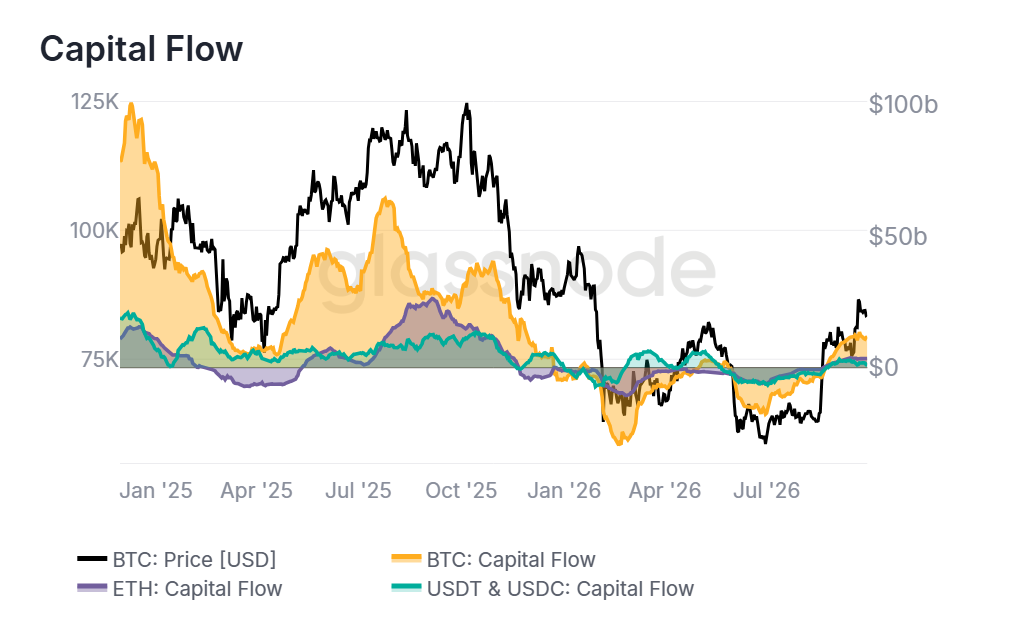
- Bitcoin and ether drew their strongest net inflows since November, while new money into stablecoins slowed.
The inflows that began in late August kept building through September. Bitcoin's 30-day net inflow peaked near $13.5B on September 22, the most since November, and ether followed a similar path. Stablecoin inflows slowed as the month went on, which suggests money already in crypto was moving into coins. Both assets eased from their peaks in the final week. These inflows came with a rising price, so buyers were following the move. The test is whether they hold when the price stops helping.
ETF & DAT Net Flows
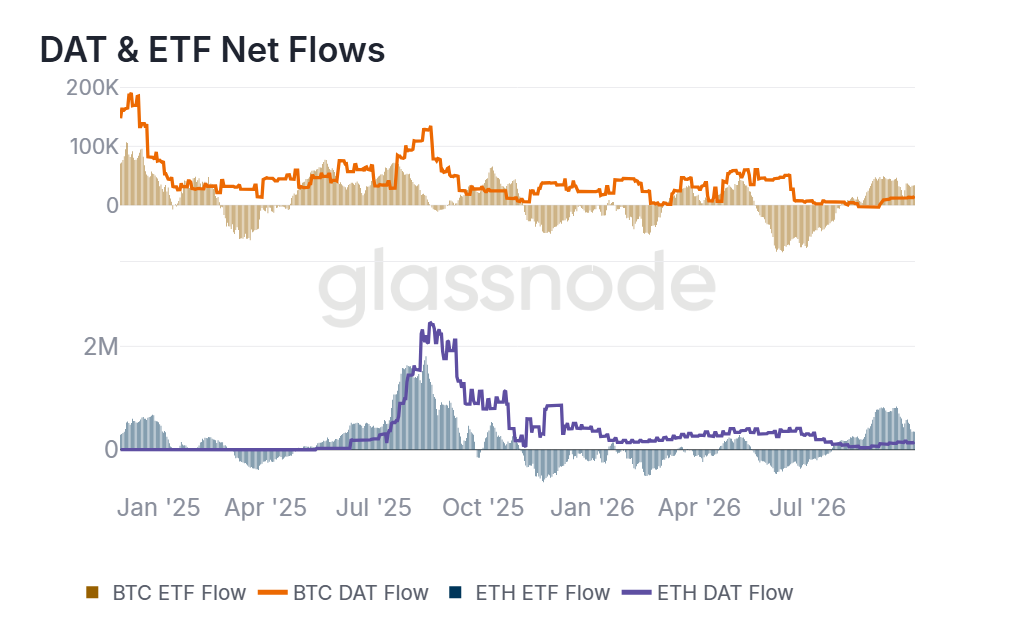
- Companies holding bitcoin on their balance sheets returned as buyers, while inflows into ether ETFs faded through September.
US spot ETFs kept buying bitcoin, but at a slower pace. Their 30-day inflow dipped to 13.7K BTC around September 20, then recovered to 34K BTC by month end. Companies that hold bitcoin on their balance sheet, which were net sellers in late August, bought again, and their 30-day flow reached its highest since June. Ether ETF inflows more than halved over the month, while ether treasury companies kept adding. In August only ETFs were adding bitcoin. Now both groups are.
DeFi TVL
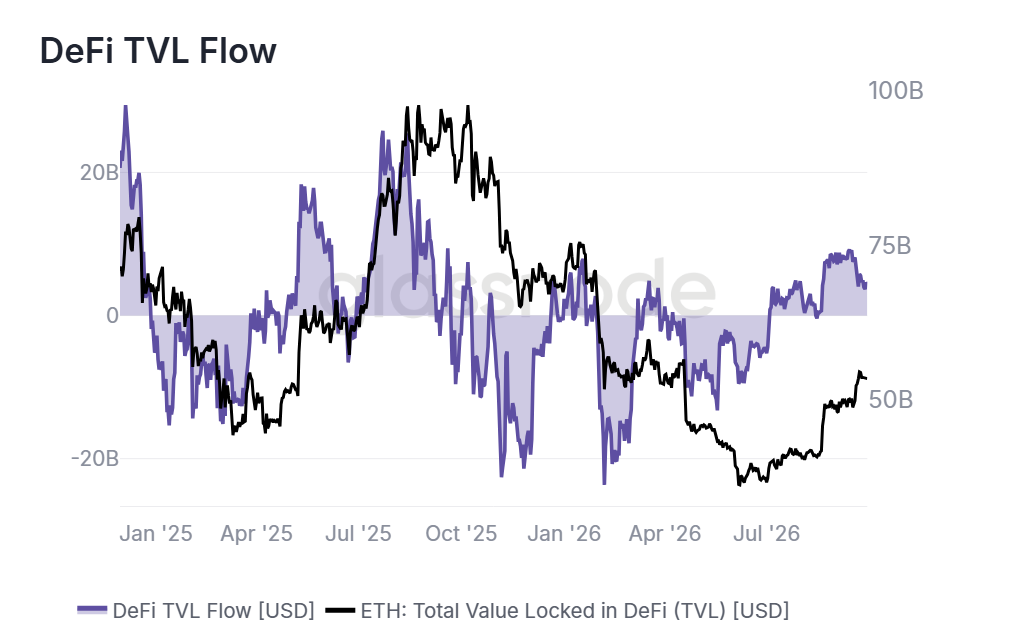
- The dollar value locked in Ethereum DeFi reached its highest level since April, jumping with the late September rally.
Total value locked (TVL) is the dollar value of assets deposited in Ethereum lending and trading protocols. It held steady through the mid-month sell-off, then jumped with the September 21 rally and peaked near $54.5B, its highest since April. Because TVL is counted in dollars, it rises with the ether price even if no one deposits more. The 30-day change halved over the month, mostly because the late August jump dropped out of its 30-day window. Depositors did not pull money out when prices fell mid-month.
CME Basis Yield
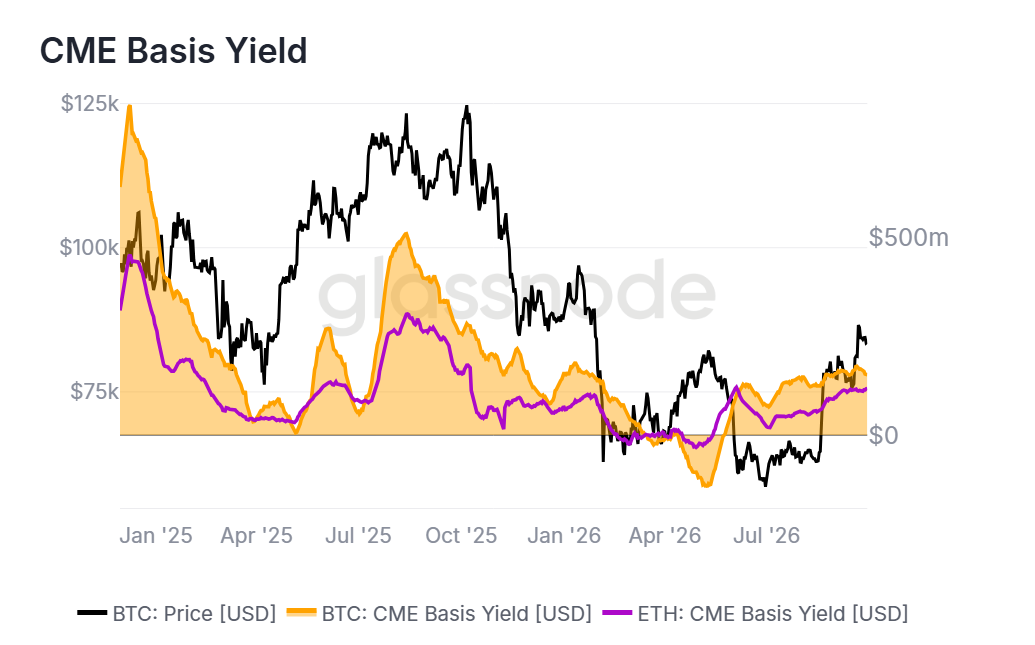
- Returns from buying spot and selling futures spiked and faded for bitcoin in the late rally, while ether's rose all month.
This measures what traders earn by buying spot and selling futures against it, summed over 30 days. For bitcoin it rose quickly from mid-month and peaked near $176M on September 19, its highest since January, as leveraged buyers paid more in total to hold long futures positions. Within ten days it was back where the month began. Ether's measure climbed through September and ended at its highest since June. A spike that fades this fast suggests leverage came back with the rally but did not stay, which fits managers' reports that carry paid only in short bursts.


Disclaimer: This report does not provide any investment advice. All data is provided for information and educational purposes only. No investment decision shall be based on the information provided here and you are solely responsible for your own investment decisions. Exchange balances presented are derived from Glassnode’s comprehensive database of address labels, which are amassed through both officially published exchange information and proprietary clustering algorithms. While we strive to ensure the utmost accuracy in representing exchange balances, it is important to note that these figures might not always encapsulate the entirety of an exchange’s reserves, particularly when exchanges refrain from disclosing their official addresses. We urge users to exercise caution and discretion when utilizing these metrics. Glassnode shall not be held responsible for any discrepancies or potential inaccuracies. Please read our Transparency Notice when using exchange data.
